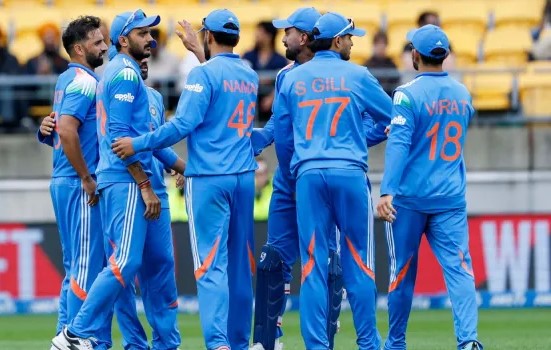
India have strengthened their position in the five-match ODI series against New Zealand, securing a narrow four-run victory under the Duckworth-Lewis-Stern (DLS) method in the rain-affected second match at Wellington. The result gave the visitors a 2-0 advantage, but the contest was far from straightforward. A disciplined bowling performance, led by young fast bowler Gurnoor Brar, laid the foundation for the win before rain interrupted India's chase and brought the match to an unexpected finish.
New Zealand, asked to bat first after India won the toss, found scoring difficult on a surface that offered assistance to the bowlers. The hosts were eventually dismissed for 134 in 41 overs after the match had already been reduced to 47 overs per side because of an earlier weather interruption. Brar was the standout performer, claiming four wickets for 30 runs from his 10 overs. His spell was particularly valuable because it prevented New Zealand from building momentum during the middle and lower phases of their innings.
Daryl Mitchell provided the strongest resistance for the home side with 55 runs from 104 deliveries. His innings included five boundaries and two sixes, but the lack of substantial partnerships around him restricted New Zealand's total. Captain Mitchell Santner contributed 31, offering some support during a period when the hosts needed to accelerate. However, India's bowlers maintained pressure and ensured that New Zealand could not turn their starts into a competitive score.
Brar's performance was supported by contributions across the attack. Auqib Nabi, Anshul Kamboj and Axar Patel picked up two wickets each, giving India a balanced bowling effort rather than leaving the responsibility to one individual. The collective display was significant in conditions where accuracy, patience and the ability to exploit movement mattered more than simply chasing speed.
India's response began with early setbacks. New Zealand's fast bowlers made effective use of the conditions, removing key batters and preventing the visitors from establishing a comfortable rhythm. Shreyas Iyer scored 30, providing a measure of stability, while KL Rahul remained unbeaten on 26. Their contributions helped India stay in contention, although wickets continued to fall and the chase became increasingly tense.
When rain stopped play again, India were 113 for seven after 26 overs. The match could not resume, and the DLS calculation placed India four runs ahead of the required par score. As a result, the visitors were declared winners by four runs. The narrow margin underlined how important every run and wicket had become in a match shaped by interruptions.
The victory also highlighted the growing value of India's bowling depth. Brar's four-wicket haul was not merely a strong individual performance; it demonstrated how emerging fast bowlers can influence matches when they combine control with the confidence to attack. For New Zealand, the defeat raises questions about their batting depth and their ability to adapt when conditions favour disciplined seam bowling.
India's 2-0 lead provides a valuable advantage as the series progresses, but it does not settle the contest in a five-match series. The team will want to improve its batting response and avoid allowing early wickets to create unnecessary pressure. New Zealand, meanwhile, will need greater support for their established batters and a more decisive approach when opportunities arise. The second ODI may have ended through the DLS method, but its key message was clear: India's bowlers are currently setting the tone of the series.